Damp-Proofing Company in Durban
Durban Waterproofing & Roofing provides professional damp-proofing solutions throughout the greater Durban area
Durban's Top Damp-Proofing Company
Damp is one of the most common property problems in Durban, but treating it successfully starts with understanding where the moisture is coming from.
Peeling paint, bubbling plaster, mould, discolouration and white salt deposits may all indicate a damp problem, but they do not necessarily have the same cause. Rising damp, lateral damp and penetrating damp behave differently and require different treatment methods. Simply painting over the affected area may improve its appearance temporarily, but it does not address the source of the moisture.
At Durban Waterproofing & Roofing, we provide professional damp-proofing services for residential, commercial and industrial properties throughout Durban, Umhlanga, Durban North, Berea, Westville, Hillcrest, the Bluff, Ballito and surrounding areas.
Our Damp-proofing Solutions:
- Rising Damp Solutions
- Penetrating Damp Solutions
- Drill and Inject Applications
- Cementitious Applications
With almost 20 years of industry experience, our team specialises in identifying the type and source of damp before recommending the appropriate treatment.
Professional Damp-Proofing Services
Effective damp-proofing is about more than repairing a damaged wall. The first and most important step is determining why moisture is present.
Moisture can rise from the ground, penetrate through an external wall or move laterally through a wall exposed to soil or another moisture source. Failed waterproofing, roofing problems, drainage issues and plumbing leaks can also create symptoms that appear similar to damp.
This is why simply painting over a damp wall rarely provides a long-term solution.
Our team assesses the affected area and surrounding structure to determine the likely source before recommending the correct damp-proofing treatment.
What Are the Signs of a Damp Problem?
You should consider having your property professionally assessed if you notice:
- Paint repeatedly peeling or bubbling
- Plaster becoming soft, powdery or damaged
- Damp patches on internal walls
- White salt deposits
- Moisture concentrated near floor level
- Damp affecting retaining or below-ground walls
- Musty smells
- Persistent mould
- Damp becoming worse after rainfall
- Damage returning after previous repairs or repainting
The location and behaviour of these symptoms can provide clues about the source, but a professional assessment is recommended before deciding on a treatment.
How Is Rising Damp Treated?
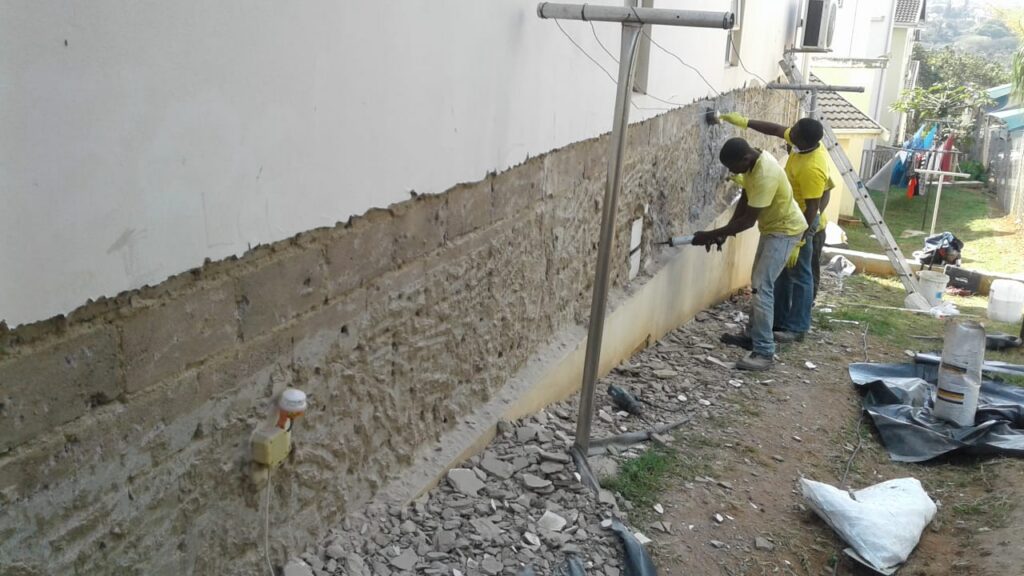
One of the methods we use to treat rising damp is a drill-and-inject damp-proofing application.
A series of carefully positioned holes is drilled into the affected masonry before a specialist damp-proofing treatment is injected into the wall. This creates a new barrier designed to restrict moisture from continuing to rise through the masonry.
Treating the moisture source is only part of the process. Plaster that has been damaged or contaminated by prolonged damp and salts may also need to be removed and repaired as part of the overall treatment.
The aim is to address the cause of the rising moisture, rather than simply repairing the visible paint and plaster damage.

What Is Rising Damp?
Rising damp occurs when moisture from the ground moves upwards through porous building materials such as brickwork and mortar through capillary action.
Buildings generally have a damp-proof course designed to prevent this movement. If this barrier is missing, damaged, bridged or no longer functioning effectively, ground moisture may begin travelling upwards through the wall.
Common signs of rising damp include:
- Peeling or bubbling paint near floor level
- Damaged or crumbling plaster
- Damp patches beginning at the bottom of walls
- White, powdery salt deposits
- Musty odours
- Damage that repeatedly returns after repainting
Because rising damp generally begins at ground level and moves upwards, the location and pattern of the damage can provide important clues when diagnosing the problem.
How Is Penetrating Damp Treated?
There is no single treatment for penetrating damp because the correct solution depends entirely on where the water is entering the property.
For example, an internal damp patch may actually be caused by a leaking roof, failed balcony waterproofing or a crack in an exterior wall.
Our team therefore investigates the affected area and surrounding structure to identify the source of water ingress.
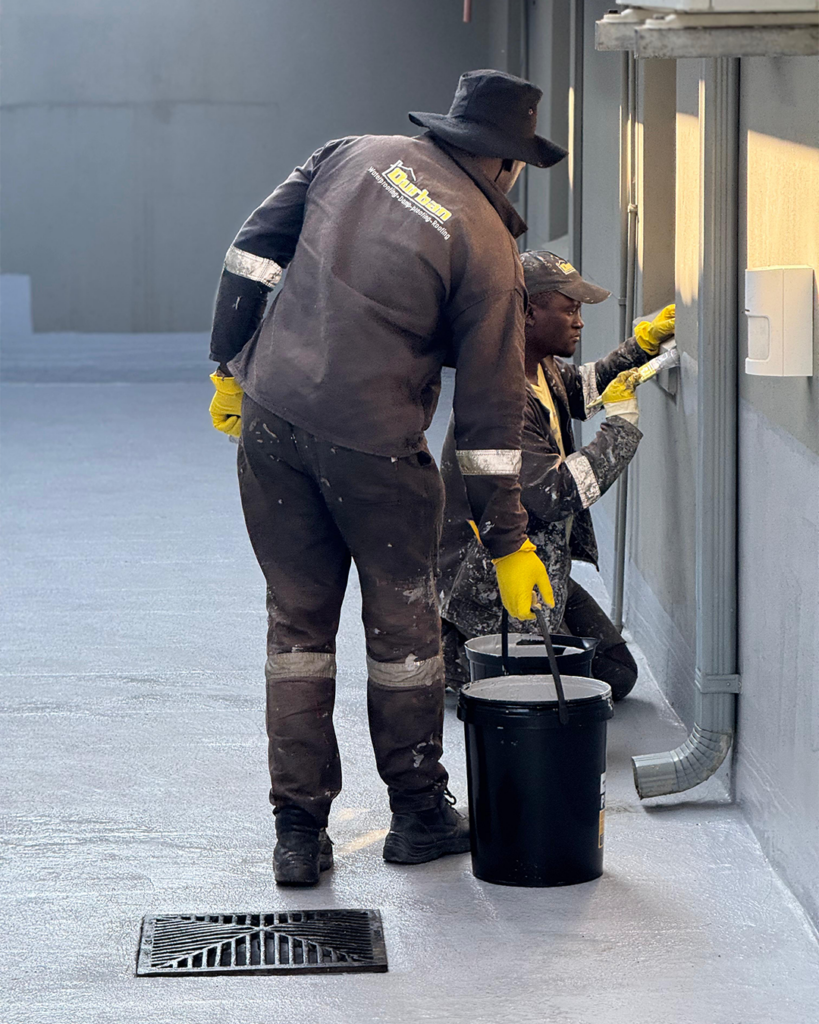
Depending on what we find, treatment may involve cementitious waterproofing, exterior waterproofing, crack repairs, roofing repairs, drainage improvements or another suitable waterproofing solution.
Because Durban Waterproofing & Roofing specialises in damp-proofing, waterproofing and roofing, we can investigate multiple potential causes rather than treating the damaged wall in isolation.
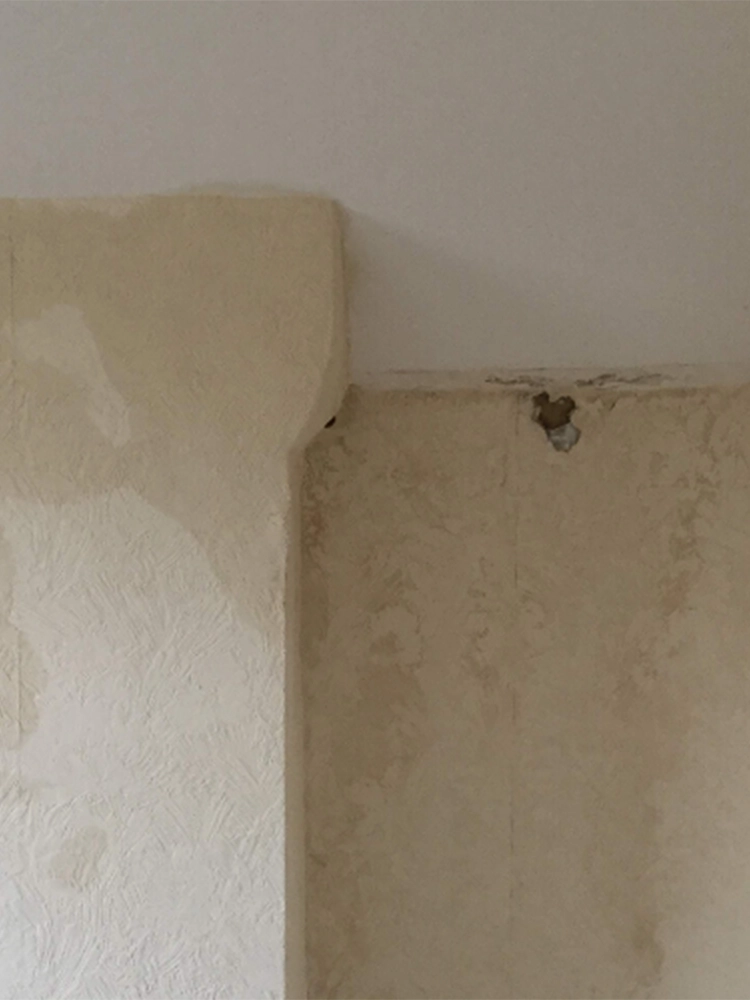
What Is Penetrating Damp?
Penetrating damp occurs when water enters a building through an external surface or defect.
Unlike rising damp, it does not necessarily begin at floor level. Moisture can appear anywhere on a wall or ceiling depending on the point of entry.
Common causes of penetrating damp include:
- Cracks in external walls
- Deteriorated exterior surfaces
- Failed waterproofing
- Roof leaks
- Balcony waterproofing failures
- Parapet wall problems
- Poor drainage
- Damaged joints or seals
- Water entering around openings
Damp patches that become noticeably worse during or shortly after rainfall can be an indication of penetrating water.
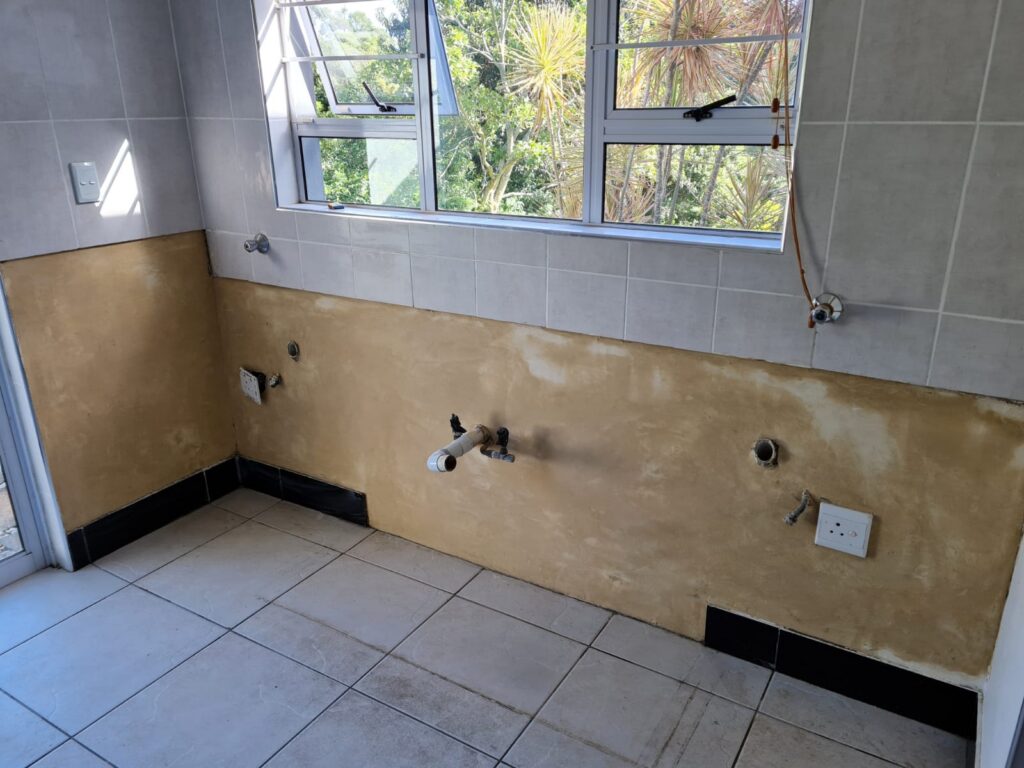
Why Is Damp Common in Durban Properties?
Properties in Durban and along the KwaZulu-Natal coast are regularly exposed to rainfall, humidity and moisture.
However, climate is only one factor.
The age and construction of a building, surrounding ground levels, drainage, failed waterproofing, roofing problems and the condition of existing damp-proof courses can all contribute to moisture problems.
Older properties may experience problems with ageing or ineffective damp-proof courses, while homes built against slopes or raised ground may be more susceptible to lateral moisture.
Properties throughout Durban, Berea, Westville, Hillcrest, the Bluff, Durban North, Umhlanga, Ballito and the North Coast can therefore experience different types of damp depending on their construction and surroundings.
There is no single treatment suitable for every damp problem.
Residential Damp-Proofing
Protect your home from persistent moisture with professional damp-proofing solutions for rising damp, lateral damp and penetrating damp. We identify the source of the problem and provide the appropriate treatment to prevent further damage to walls, plaster and finishes.
Commercial Damp-Proofing
Keep your commercial property protected with professional damp-proofing solutions for offices, retail spaces, complexes and other commercial buildings. We identify and treat rising, lateral and penetrating damp to prevent recurring moisture damage and unnecessary maintenance.
Industrial Damp-Proofing
Protect warehouses, factories and industrial facilities from ongoing moisture problems with specialist industrial damp-proofing solutions. We assess rising, lateral and penetrating damp and provide suitable treatments for concrete, masonry, retaining walls and other affected areas.
Looking for a Damp-Proofing Company in Durban?
We provide professional damp-proofing in Durban and Ballito for rising damp, lateral damp and penetrating damp, including drill-and-inject damp-proofing and cementitious waterproofing applications.
From our Ballito base, our team services Ballito, the North Coast, Umhlanga, Durban North, Durban, Berea, Westville, Hillcrest, the Bluff and surrounding areas.
Contact Durban Waterproofing & Roofing today to arrange a professional site assessment and quotation.